Peptide Pureness & Return Optimizing In Spps Purepep Blog
Peptide Screening: Hplc & Mass Specification Purity Overview Apex " Trailing"-- where the top trails off slowly on one side-- can show column problems, example overloading, or second interactions in between the peptide and the stationary phase. The gold requirement for determining peptide purity is high-performance liquid chromatography, generally abbreviated as HPLC. If you see a purity portion on a peptide item, it almost certainly originated from an HPLC analysis. Note the little peaks in the blue tirzepatide example chromatogram that don't exist in the common shots around it. These might be excipients or impurities in the tirzepatide vial. Considered that they have a similar retention time to tirzepatide, Learn more they might be pollutants from Visit this page the tirzepatide synthesis process, but they could likewise be pollutants from the other excipients in the vial. Peptide Examination is a US-based lab offering HPLC and UV analysis for peptide confirmation. The laboratory emphasizes efficient sample handling and accuracy in peptide evaluation. The vendor score system aggregates testing outcomes, permitting scientists to contrast top quality patterns across various providers.
Can A Peptide Stop Working Hplc But Pass Mass Spec, Or Vice Versa?
Is 95% pureness helpful for peptides?
Peptides with an 85% purity degree or higher are typically made use of in enzyme assays or biological activity researches. Peptides with purity higher than 95% are outstanding for measurable analysis.
Nootropic peptides like Semax and Selank affect main nervous system function. The stakes of making use of polluted or misidentified items in cognitive applications call for confirmation financial investment. Peptides like ipamorelin and sermorelin boost all-natural hormone manufacturing. Purity matters due to the fact that impurities might have their own organic activity, confounding outcomes.
Sample Receipt
This is very rarely the instance, nonetheless well a protocol is optimized, and the danger of side responses and insufficient reactions implies that peptide purity comes to be a vital concern in the context of the application. One more related term you could run into is net peptide content, which is different from pureness. Net peptide web content describes how much actual peptide (by weight) remains in the vial relative to non-peptide parts like water, counter-ions (e.g., TFA), or buffer salts. It's feasible to have a peptide that is, state, 95% pure by HPLC and yet the internet peptide content is something like 70% of the powder's weight (the remainder being water and salts). Don't be upset-- this is regular and is generally identified by separate analyses (like amino acid evaluation).
The reproducibility dilemma in biomedical study is well-documented.
During the discovery, we use RP-HPLC integrated with MS to determine the molecular weight of the peptide.
This is the only means to ensure that the compound has the appropriate organic activity and is precisely what it claims to be.
For a 30-residue peptide at the same effectiveness, that drops to approximately 86%.
Researchers frequently evaluate HPLC and mass spectrometry data.
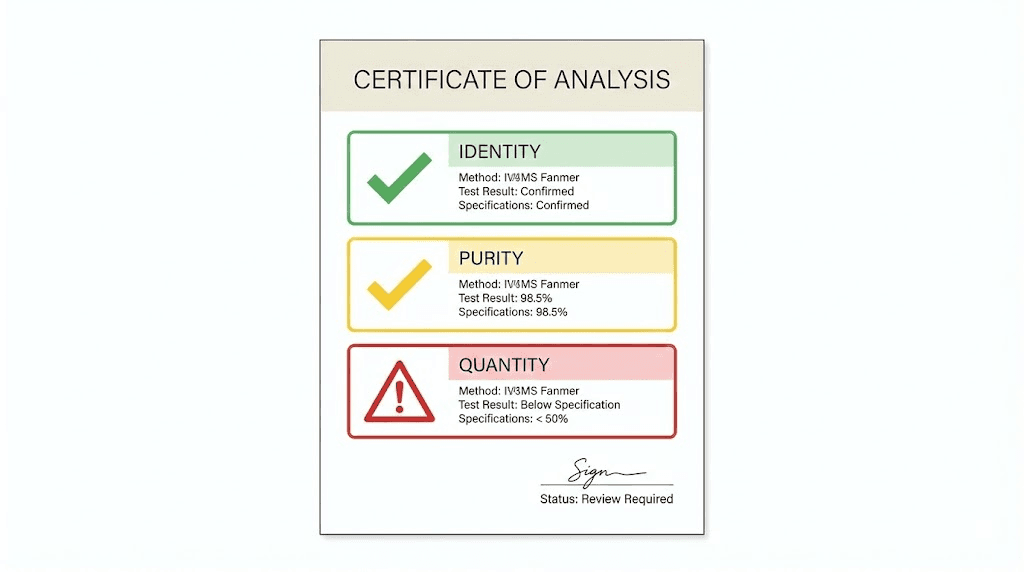
Comprehending what the data implies overviews your decisions regarding the examined item. Endotoxins are lipopolysaccharides from gram-negative germs. Also trace quantities can cause pyrogenic (fever-inducing) feedbacks in people. Endotoxins are extremely heat-stable, so typical sterilization can not destroy them. They also adhere well to research laboratory tools, allowing contamination to spread quickly. Samples undertake independent third-party laboratory verification. High-performance liquid chromatography (HPLC) verifies ≥ 99.3% purity, while mass spectrometry (MS) confirms molecular identification and architectural accuracy. Trusted dimension techniques are crucial for quality assurance.
Chromatography Column
Peptide purity testing continues to be among the most essential tools scientists use to review research compound quality. Through methods such as HPLC and mass spectrometry, scientists can much better comprehend peptide make-up, verify item identification, and review vendor high quality requirements. When integrated with Certificates of Evaluation and transparent documentation, purity screening assists sustain notified sourcing decisions and long-term study consistency. When examining a peptide suppliers checklist, researchers should focus on suppliers that provide detailed analytical data. Commercial intent for peptides often causes a market saturated with resellers who might not verify the stability of their stock during transit. Scientists frequently assess identity screening to verify that the substance being examined matches the desired peptide. Samples are separately tested by our third-party laboratory companion, Janoshik. Licensed logical records are issued and made openly available to guarantee complete transparency and independent verification. We have the ability of offering customers from early peptide medicine discovery phases to peptide evaluation. We provide all the technical information and guidelines for each step of peptide synthesis and evaluation. At Chameleon Peptides, every product ships with comprehensive third-party screening documents.